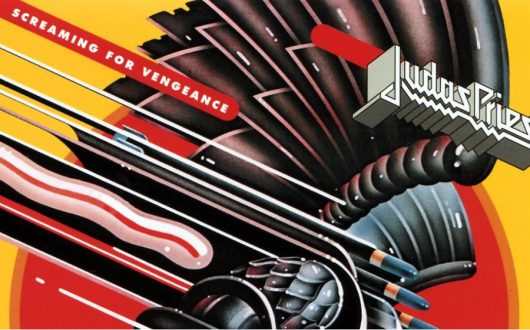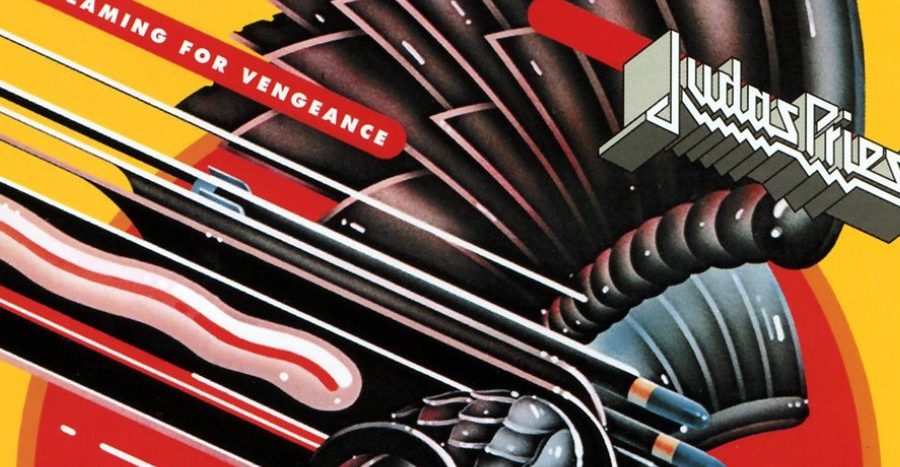
Judas Priest | Columbia Records | July 17, 1982
Line Up:
Rob Halford – Vocals Glenn Tipton – Guitars, Synthesizers K.K. Downing – Guitars Ian Hill – Bass Dave Holland – Drums
Production: Tom Allom – Producer, Engineer Judas Priest – Co-producers
Tracklist:
The Hellion (0:41)
Electric Eye (3:39)
Riding on the Wind (3:07)
Bloodstone (3:51)
(Take These) Chains (3:07)
Pain and Pleasure (4:17)
Screaming for Vengeance (4:43)
You’ve Got Another Thing Comin’ (5:09)
Fever (5:20)
Devil’s Child (4:48)
In the summer of 1982, five Birmingham metalheads unleashed a sonic assault that would redefine what heavy metal could achieve both artistically and commercially. This wasn’t just another album—it was a declaration of war against mediocrity, a perfectly calibrated machine designed to pulverize speakers and captivate audiences in equal measure.
What Judas Priest accomplished here represents the apex of their classic era prowess: an immaculate fusion of technical virtuosity, compositional intelligence, and primal power. The production, helmed by longtime collaborator Tom Allom, captures the band at their most vicious yet most refined, with a guitar tone so pristine and ferocious it established a new benchmark for the genre.
Glenn Tipton and K.K. Downing deliver what remains one of the most devastating twin-guitar performances ever committed to tape. Their interplay throughout demonstrates an almost telepathic understanding—trading solos, harmonizing leads, and constructing rhythmic foundations with clockwork precision. They never compete; they complement, creating a wall of sound that’s simultaneously dense and crystal clear. The crunch is immediate, the melodies unforgettable, the technical execution flawless.
Rob Halford operates at peak supernatural ability here. His range—from guttural menace to piercing wails that could shatter glass—remains unmatched in metal. Listen to his banshee shriek during the title track’s chorus, or the emotional devastation he delivers in “Devil’s Child,” and understand why he earned the title Metal God. These aren’t just performances; they’re master classes in vocal control and expression.
The album opens with perhaps the most iconic one-two punch in metal history. “The Hellion” builds tension with its synthesizer-driven prelude before detonating into “Electric Eye,” a paranoid masterpiece about surveillance that remains chillingly relevant. The transition is seamless, powerful, perfectly executed—a microcosm of the album’s overall excellence.
Then there’s the phenomenon of “You’ve Got Another Thing Comin’,” the album’s undeniable commercial triumph. With its stadium-ready chorus and accessible structure, it became Priest’s biggest hit while never compromising their metallic integrity. The track proved heavy metal could dominate radio and MTV without dilution—a lesson that would reshape the genre’s commercial landscape.
But the deep cuts reveal the album’s true depth. “Riding on the Wind” delivers breakneck velocity. “Fever” constructs atmosphere through tension and release. “Devil’s Child” grooves with malevolent intent. “Screaming for Vengeance” itself rages with righteous fury. There are no weak moments, no filler, no compromises—just ten tracks of meticulously crafted metal perfection.
The Aftermath: Triumph, Transition, and Tribulation
The commercial and critical success proved both blessing and curse. The album achieved platinum certification in the United States, establishing Priest as genuine arena headliners and opening metal’s floodgates to mainstream acceptance. The subsequent tour became legendary, with Halford roaring onto stages atop his motorcycle—theatrical heavy metal at its absolute peak.
The 1984 follow-up Defenders of the Faith maintained the momentum with similar commercial success and critical respect, though some argued it lacked the predecessor’s spontaneous fire. Turbo (1986) divided fans with its guitar synthesizers and more commercial orientation, leading to accusations of selling out—charges that stung but didn’t derail the band’s trajectory.
The late 1980s brought controversy when the band faced a highly publicized lawsuit alleging subliminal messages in their music led to a suicide pact. Though ultimately exonerated, the ordeal took its psychological toll. The 1990 album Painkiller represented a ferocious return to form, but by then grunge and alternative rock were reshaping the musical landscape.
Halford’s departure in 1992 fractured the classic lineup. His replacement Tim “Ripper” Owens fronted the band through two albums that received tepid responses. Meanwhile, Halford explored industrial metal with Fight and Two, achieving artistic satisfaction if not commercial glory.
The reunion in 2003 felt inevitable and was rapturously received. Angel of Retribution (2005) proved the chemistry remained intact. K.K. Downing’s departure in 2011 seemed like it might prove fatal, but replacement Richie Faulkner proved more than capable, injecting youthful energy into the veteran outfit.
By the 2020s, Priest had achieved elder statesman status. Their 2018 album Firepower received widespread acclaim for demonstrating that the aging warriors still possessed their bite. The 50 Heavy Metal Years tour became a victory lap, though questions about how much longer Halford’s voice could maintain its supernatural power lingered unspoken.
Yet nothing diminishes what was achieved in 1982. This album stands as an indelible monument to heavy metal’s power and possibility—proof that commerciality and artistic integrity need not be opposing forces, that technical mastery and emotional expression can coexist, that metal, when executed at this level, transcends temporary trends to achieve permanence.
Four decades later, these songs still detonate with their original force. The guitar tones remain reference points. The compositions continue inspiring new generations of metalheads. And somewhere, someone is discovering for the first time why every serious student of electric guitar needs this album in their collection.
Essential. Transcendent. Eternal.
Written by: Shadow Editor
Ratings: 10/10
Editors Pick 
About Author